E-commerce Website: Sell, Gain Autonomy, Build Loyalty
The three reasons to build an e-commerce site: sell without intermediaries, take back control of your margins, and turn a buyer into a loyal customer.
Read moreWordPress, Drupal or Joomla: cost, security, search performance and maintenance compared without dogma, from the desk of a Tunisian web agency in Tunis.
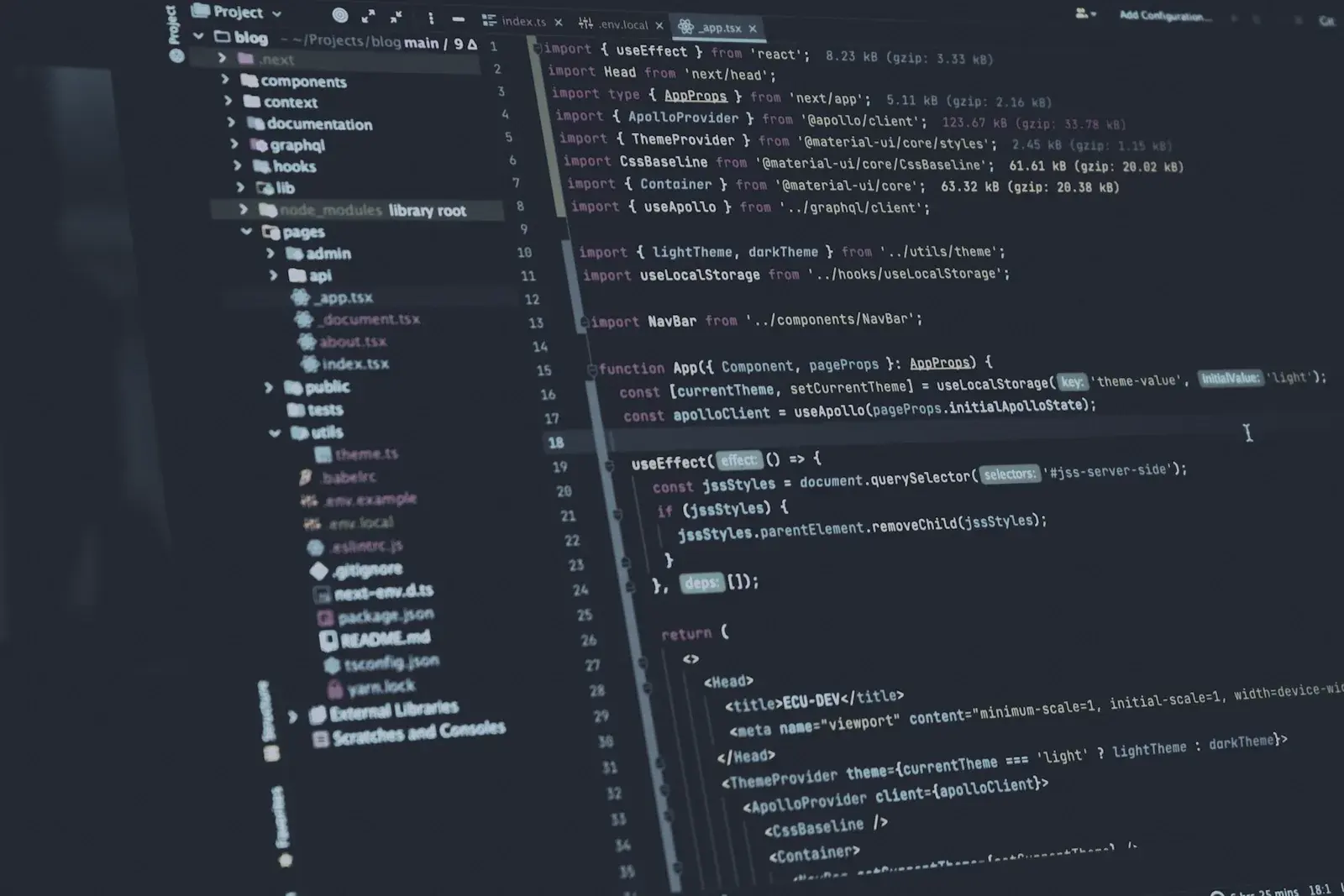
Photo Juanjo Jaramillo on Unsplash
Three open-source content management systems still dominate the Tunisian market. The debate often turns tribal; it should really come down to three variables: who will administer the site, how much maintenance budget you accept, and how complex your content model is.
WordPress powers more than 40% of the web and the overwhelming majority of business sites in Tunisia. Its advantage is not technical, it is ecosystemic. You will always find an integrator, a plugin, a theme, an answer on a forum. The admin takes half a day to learn, which matters enormously when the person publishing is a sales assistant, not a developer.
Drupal thinks in content types, fields, taxonomies and granular permissions. Where WordPress would have you improvise, Drupal models cleanly: a member directory with fifteen roles, an institutional multi-site portal, a document-heavy intranet. It is also the strongest natively on security and multilingual handling : a genuine argument for a trilingual French, English and Arabic site.
Joomla sits between the two: more structured than WordPress, more approachable than Drupal, with multilingual support built in and no extension required. It is a decent tool, but its community shrinks every year. In practice, finding a provider in Tunisia willing to take over a Joomla site in 2025 is already hard, and will be harder in 2030. We no longer recommend it for a new build, only for maintaining a healthy existing one.
One last point that is often forgotten: whatever the CMS, insist that your content stays exportable. An accessible database, clean URLs and organised media guarantee that you can switch tools one day without starting from scratch. That portability, far more than the software name, is what protects your investment.
The three reasons to build an e-commerce site: sell without intermediaries, take back control of your margins, and turn a buyer into a loyal customer.
Read more
Definition, the six technical components and the payment methods available in Tunisia: everything that makes up an online store that actually sells.
Read more
Wix, Shopify, WordPress.com: what the DIY system really is, what it allows, where its limits sit, and the exact moment a growing business should move beyond it.
Read moreLet's talk. We reply within 24 h, with a free quote and no strings attached.